









The Secret Great Leaders Know.
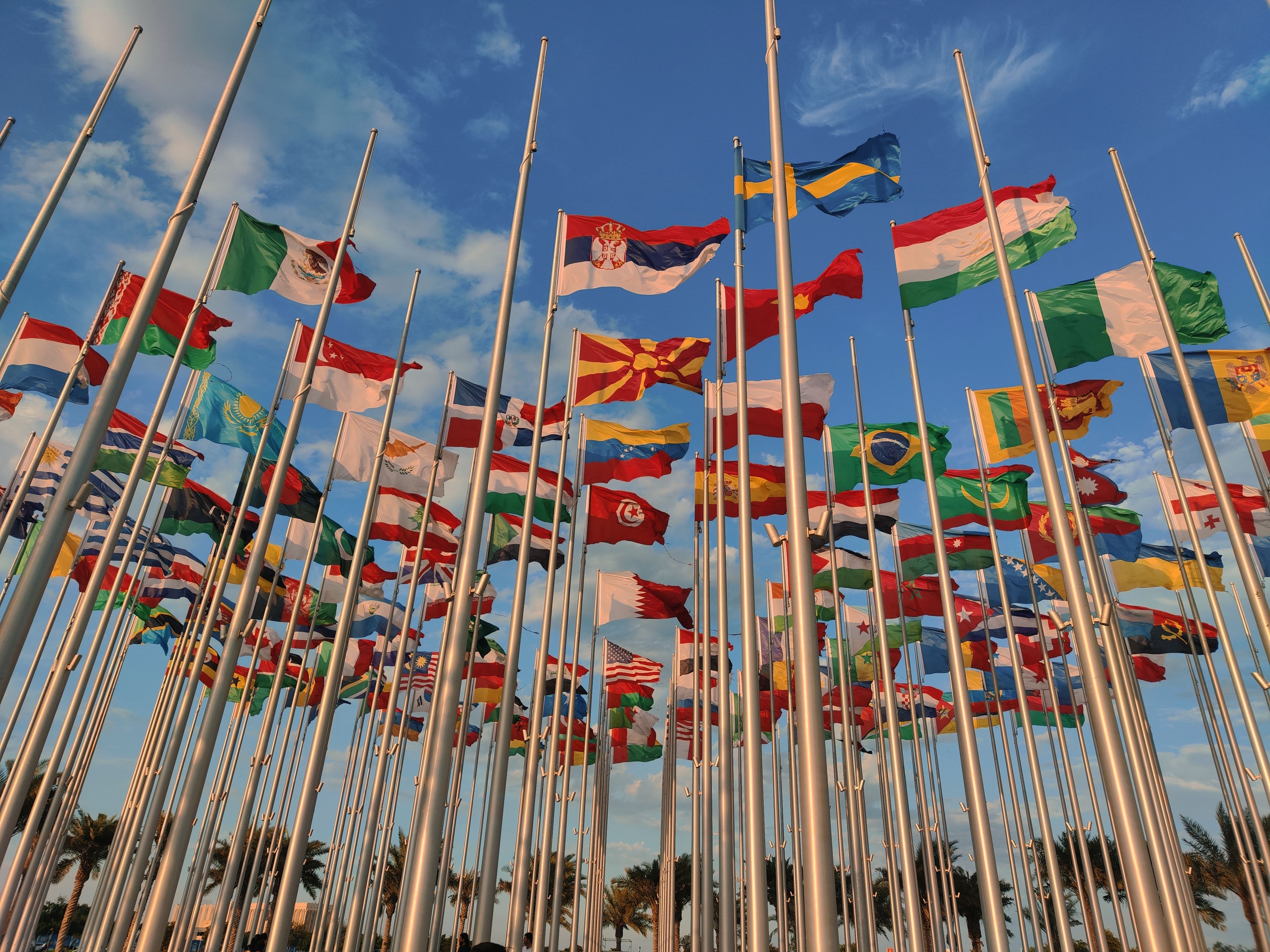
Recently, the 2026 FIFA World Cup has consumed my thoughts. To some, the games are marred by favoritism, politicization, and sabotage. These have cast a stain on an experience that, for many is a fantasy. While I have mourned the loss of such allure, I have been mesmerized by the hidden message continually flashing on the screen. Notably, I am not referring to the Rexona and Modelo ad banners that rotate on repeat around the field. I am referring to something more enduring than deodorant and beer commercials!
Why does it matter?
I am a big fan of soccer and have delightful childhood memories! My dad took my sister and me to the stadium to watch my first soccer championship finals when I was four years old. Also, every four years, he allowed my sister and me to stay up way past our bedtime to watch the World Cup games with him. Each time, I was awestruck by how people from all over the world with different cultures, looks, outfits, and languages united for the love of the game. It felt surreal. I didn’t fully understand why until I was older.
Football, aka soccer, is a unifier. Over the years, inclusion has fueled the sport! Many of the greatest stars of most European soccer teams descended from or migrated from Africa. The list of such players is long and includes notable stars such as Lamine Yamal, Romelu Lukaku, Ousmane Dembélé, and Kylian Mbappé – to name a few. Evidently, the acceptance and inclusion of differences promote success. And football presents a compelling business case for diversity nationally and globally.
The path to success
To some, diversity is terrifying – nothing more than robbing Peter to pay Paul. Unfortunately, this is sometimes the case. Particularly when one leverages diversity to idealize their image or manage their reputation rather than strengthen the whole. Notably, the damage is the result of poor leadership, not a reflection of the principle.
Diversity is simply an acknowledgment of the value of difference, and a strategy for achieving more. In the business world, it shows up as people with different skills, abilities, and perspectives pursuing a mutually beneficial goal. – It is as basic as a mechanic who specializes in repairing car engines partnering with another mechanic who specializes in bodywork.
Differences are the amplifier that enables them to deliver greater value and serve more customers.
However, when poorly implemented, diversity appears as a zero-sum game – the strengths of one are highlighted as evidence of the weaknesses of another. And to solve for this, one must address the mechanics of the practice, rather than toss out the principle.
Now, how does this tie to the World Cup?
The strategy that makes all the difference!
Originally, Europe was a land of Caucasians or whites. However, the leading European teams in the World Cup and the Union of European Football Associations (UEFA) have many non-white players. – It is not a mistake. It is a strategy that enables nations to build robust teams of highly skilled and talented players who happen to look different. And the teams succeed because they are diverse, not despite it.
The goal of diversity is supplementation and balance, not replication or comfort. And the premise is clear: Develop what you’re good at and partner with others whose strengths are your weaknesses or opportunities.
Diversity will always be valuable because no one has it all. – This is the secret great leaders know.
For you and to you,
Aké
Image credit: Pexels | Jerjer