







The Most Elusive Superpower

Some time ago, I had a twenty-minute consultation at a stretch studio, a fitness facility where flexologists assist clients with one-on-one stretching. I arrived a few minutes early, parked, and walked to the building. One staff member was there, and he greeted me at the door. He was built like a running back, and as we discussed, he said that he had an extensive athletic background. Also, he said all sessions were offered at the studio. However, on my way out, he said he would happily come to my home to conduct my sessions.
I was caught off guard! I never complained about the distance. He also didn’t ask whether it would be okay for him to come to my home. He stated it – minutes after saying all sessions were offered at the studio. Some might say he was just a nice guy, nervous, or starting his own business. All of that is possible. But it came across as imposing, and despite my obvious discomfort, he didn’t correct it. So, I didn’t want to know more. Why? A home is an intimate place, and he had assumed an unmerited closeness, even though we were strangers. When intimacy doesn’t match the depth of a relationship, it feels uneasy – even risky!
Contrast this with a different scenario!
A serious person
Over the summer, a man reached out to me about a project that is incredibly dear to me. Others reached out with similar requests, but I was not interested because of how they communicated. However, this individual was different. – He was consistent and patient, and his confidence conveyed a poignant message: I want to work with you and believe your work is immensely valuable. So, I would love to collaborate with you today, tomorrow, or never if that’s what you decide.
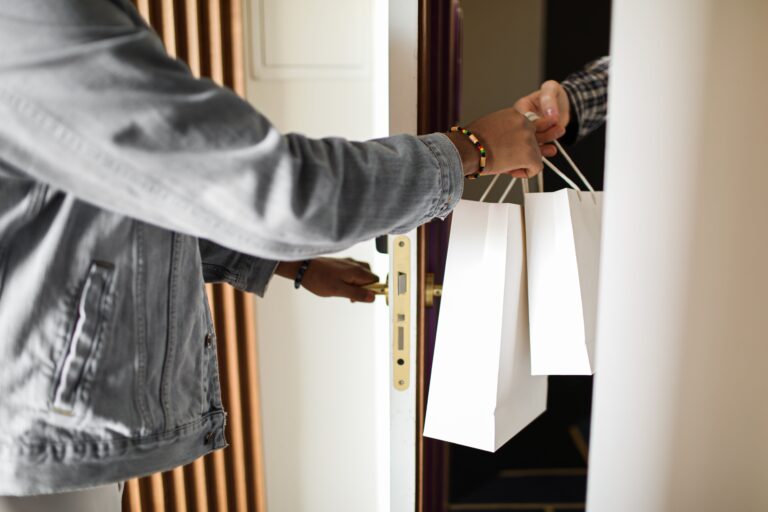
In other words, I am at the door, and you hold the keys. I am asking to be let in, but I won’t come in until and unless you open the door for me.
His non-threatening position motivated me to pry open the metaphorical door a bit. And, consistently, he backed his words with action, proving he deserves to be taken seriously. Of course, he is human; therefore, he made mistakes. But each time, he owned up to them and corrected them. – This is a powerful display of true confidence.
The power of confidence
True confidence, or lack of it, is visible when we don’t get what we want or ask for. Over several months, he showed he could stomach both yes and no – from me. This was critical because we all like to hear yes. Yet sometimes, the right answer is no. And when an adult can’t receive our NO, they don’t deserve our YES.
Indeed, how one handles such uncomfortable dynamics shows who they are. It tells us who is behind their words and message!
Who is behind the message?
The answer to who is behind a message is why we trust or don’t trust someone. Of course, by who we don’t simply mean their name. – We mean who they are at their core: what they believe and how they behave when no one is watching.
Trust is a calculated decision. – For some, the equation is simple. Many make the cut quickly, and they’re filtered over time. Meanwhile, for others, the equation is complex. It takes longer, and those who get through are kept close. So close that the bond may seem unbreakable. But it isn’t. Even when trust is grounded, it can still shake because life is full of unknowns. And trust doesn’t thrive in unknown territory. It needs predictability and clarity. – This is also why we tend not to trust people we don’t know.
When we trust those we don’t know
Typically, we don’t trust random people on the street with our treasured valuables. It doesn’t mean they aren’t trustworthy. It means they are strangers to us. We start trusting “strangers” when they feel safe. It happens when they consistently demonstrate good character and that they care for us.
Here’s what it sounds and looks like:
I think you are valuable, and I want to engage with you. However, I don’t want to take away from you. Instead, I hope that we can build something mutually beneficial over time. If it happens now, in the future, or never, it is okay. If you reject my request, I will be disappointed. However, you don’t need to worry about me. I will respect and honor your decision.
Friend, next time you feel someone ought to trust you, ask yourself what you have communicated to them in your words and actions.
For you and to you,
Aké
P.S. My accompaniment for this piece is a performance of Silhouettes by the talented pianist Jacob Ladegaard. It is a fantastic depiction of building trust, as the pianist seems to ask each key for permission before touching it.
Image credit: Pexels | Jason Pittman